
A complete money education built from first principles, not government curriculum.
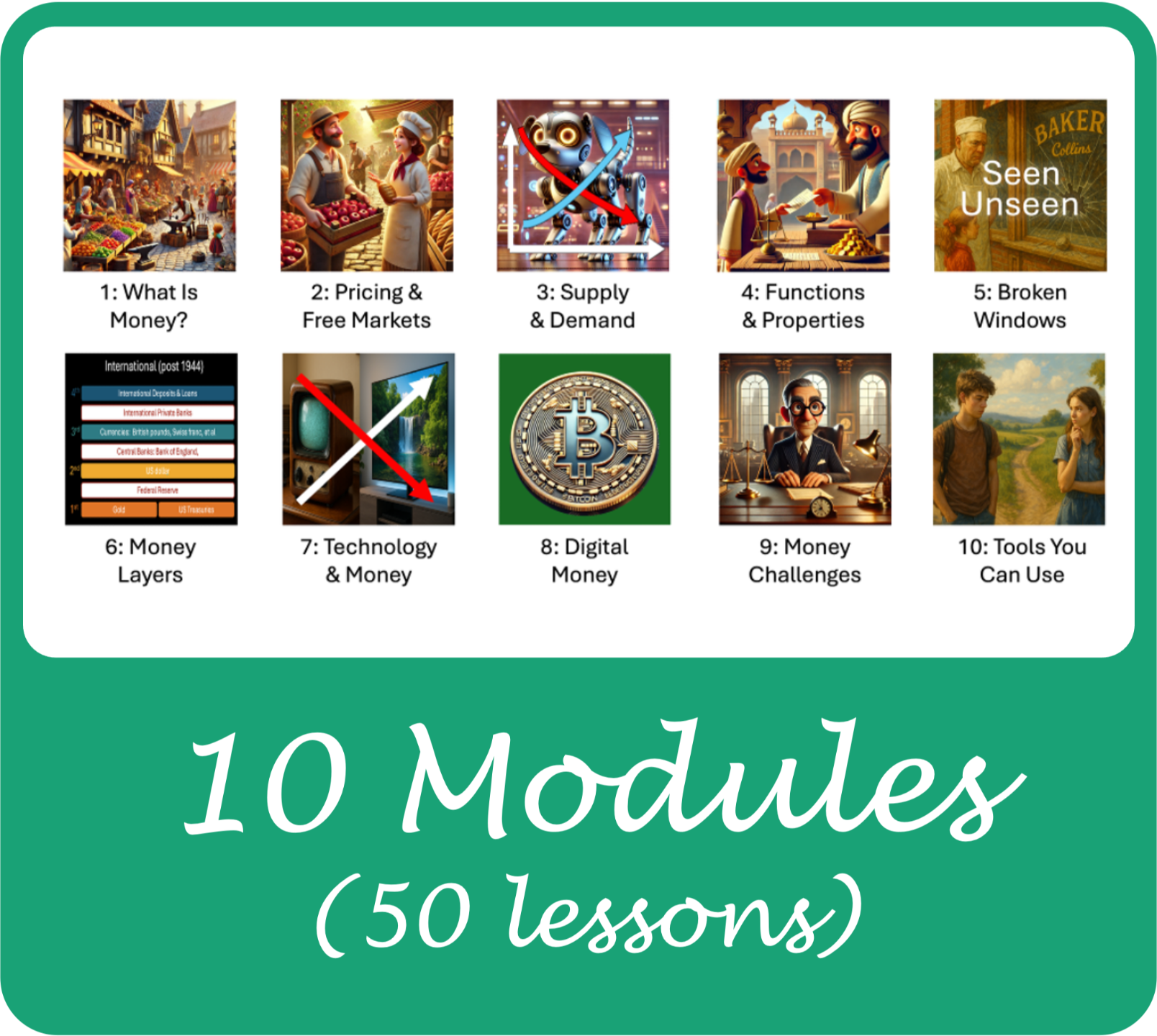
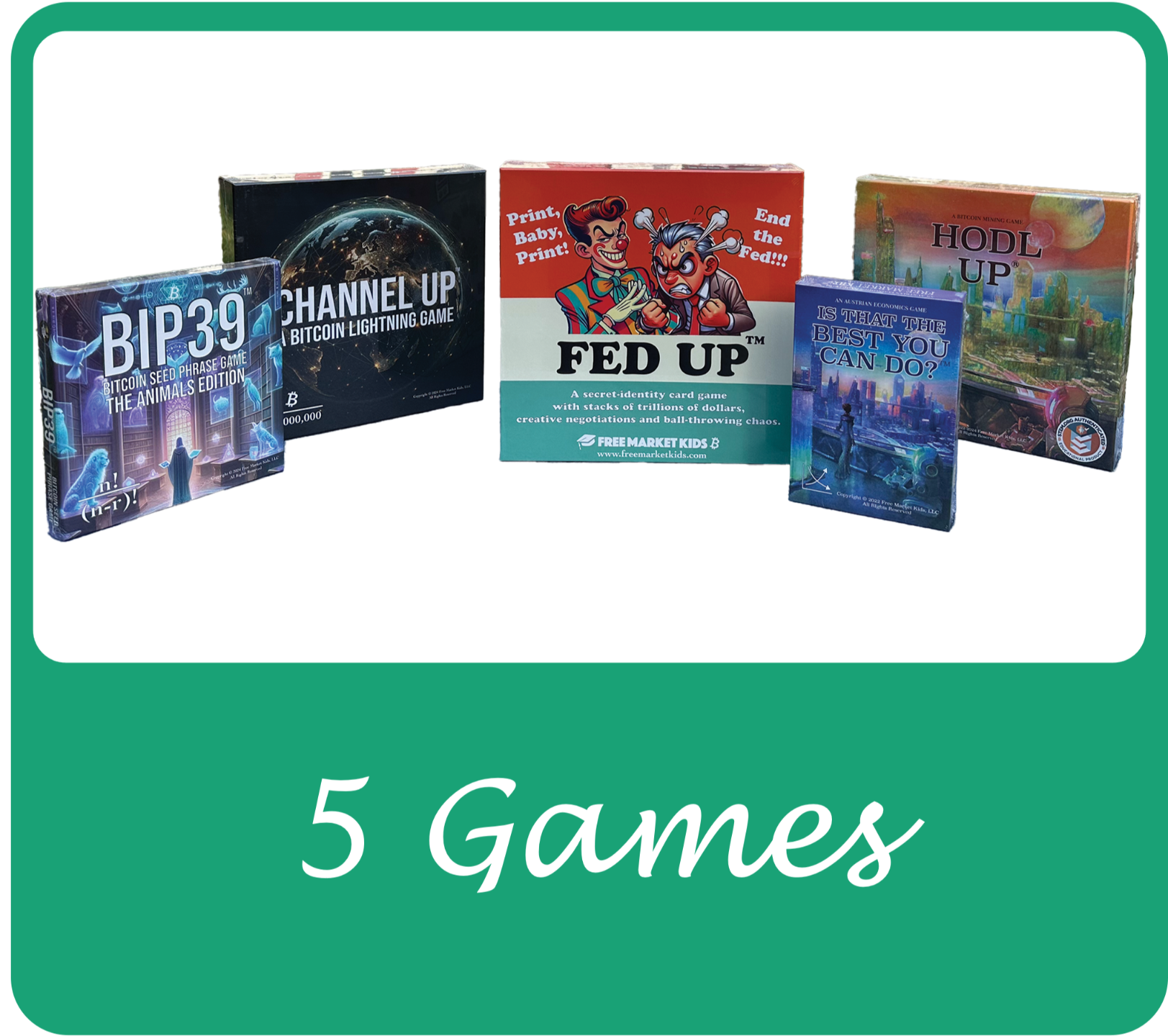
10 modules - 50 lessons - 5 tabletop games.
One course that teaches your family what schools never will.
Most families rely on a system that was never designed to teach kids how money actually works. Schools skip it. Banks obscure it. And the cost of not understanding compounds every year. Your kids deserve better than financial literacy by accident.
What your family will learn:
-
What money actually is ... and what it isn't
-
How prices emerge from voluntary exchange in free markets
-
Supply, demand, and the information hidden in every transaction
-
Digital assets, risks from the Federal Reserve, and other free-market principles
Free Market Kids has spent years building games and courses that teach what matters, not from a government curriculum, but from first principles. Our approach is simple: give families the tools to understand money for themselves.
Use code "GHC2026" at checkout for 50% off!
Basic Intro
$200
Elementary Level
- 3 modules (15 lessons)
- IS THAT THE BEST YOU CAN DO? card game ($55 value)
- Lifetime access
- Free shipping in U.S.
Full Course
$600
Middle & High School Level
- 10 modules (50 lessons)
- Full 5-game set of tabletop games ($300 value)
- Lifetime access
- Free shipping in U.S.
Micro School Package
$1,200
Up to 4 Families
- 10 modules (50 lessons)
- Full 5-game set of tabletop games ($300 value)
- Extra copy of IS THAT THE BEST YOU CAN DO? ($55 value)
- Lifetime access
- Free shipping in U.S.
Private / Live
$2,400
Limited Spots
- Live sessions customized to your schedule
- 10 modules (50 lessons)
- Full 5-game set of tabletop games ($300 value)
- Lifetime access
- Free shipping in U.S.
Looking for options without games?
We offer digital-only course packages.
Use code "GHC2026" at checkout for 50% off!
Your kids grow up understanding value, exchange, and opportunity not because someone told them what to think, but because they learned how to think for themselves.

